
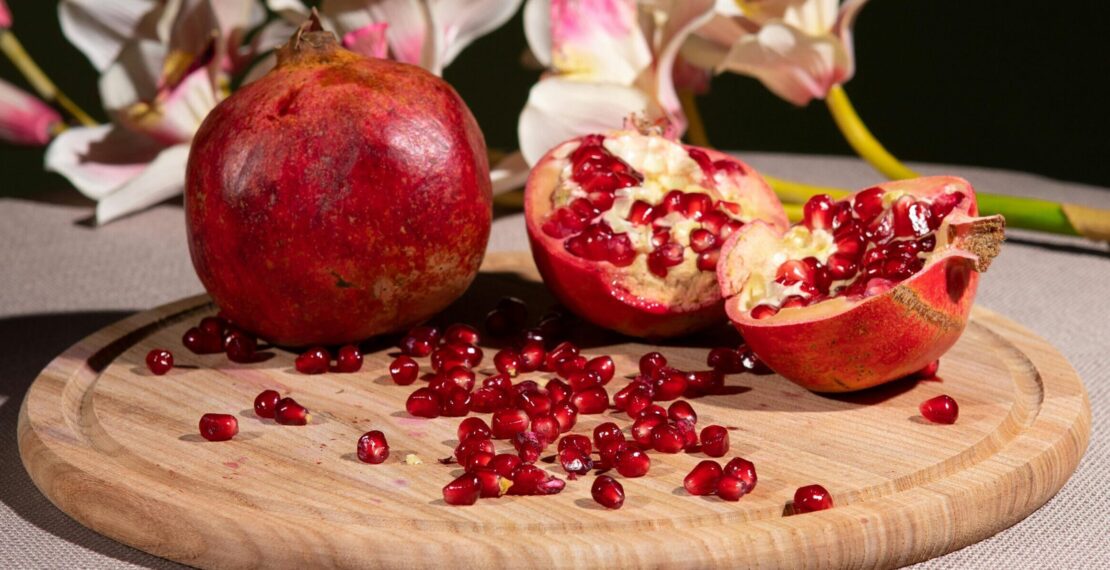
A seeded Reminiscent
Granatum is a Latin word for “many-seeded” or “containing grains” for the fruit pomegranate which gave bloom to the name Garnet for its deep red crystals resembling the fruit’s seeds. Widely embraced for its richness of red hues, this birthstone is said to imbue positivity and protection to those born in January.
In ancient times, it was also believed to hold healing properties, restore proper order to oneself, and carry many other symbolic meanings—perhaps a reflection of the gemstone’s vibrant diversity, which is not limited to red alone, but extends across green, yellow, orange, and even colourless varieties. Beyond its flourishing palette, garnet is gracefully adorned in most jewellery, a gemstone that continues to embrace in both beauty and functions.
For you, From KOBO
At KOBO, our gemstones are shared with our sister brand, FUJIMORI KAJITA. Each colour and options beautifully complement your handcrafted rings, adding a touch of individuality and meaning to every piece. In this article, we feature three unique gemstones, though they are by no means the only options—many more selections are available for you to explore.
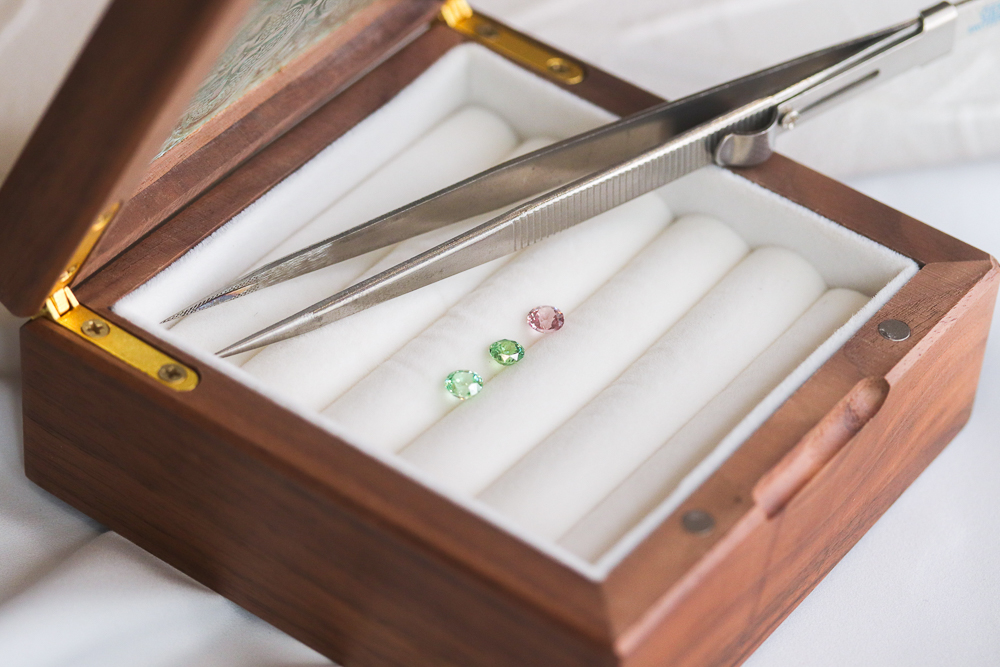
1. Mint Grossular Garnet: Beyond Red
Grossular is one of the major garnet species. It can range from colourless to almost every colour except blue, and only rarely appears in deep red tones. This versatility makes it a favoured and attainable gemstone, offering excellent value for money. Found in Tanzania, East Africa, the green variety—known as Tsavorite—is prized for its vibrant colour, which can rival emeralds in both hue and quality.
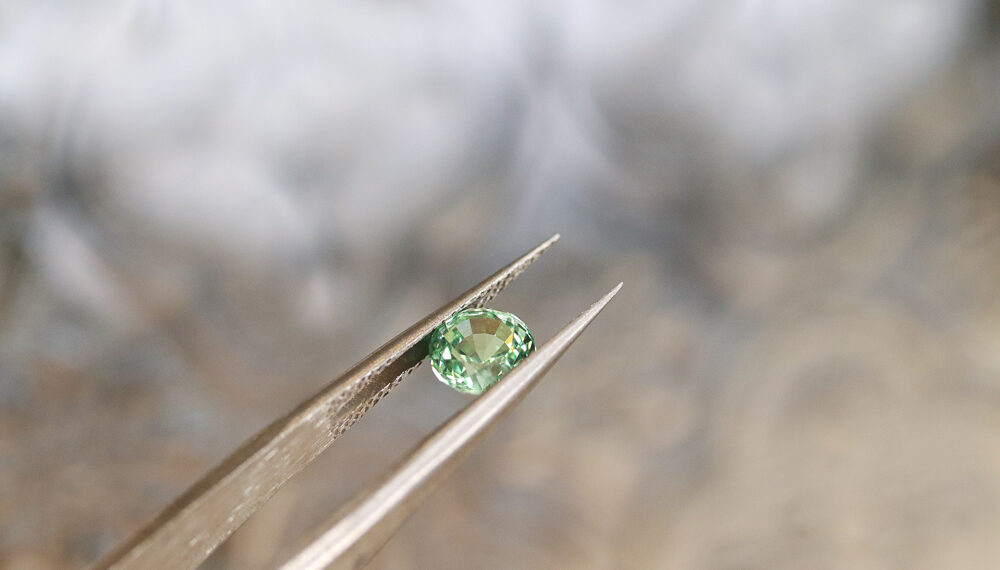
2. Demantoid Garnet: A Fiery Brilliance
Demantoid is one of the rarest garnets and a specific variety of Andradite. It features a rich green hue comparable to emerald, with a brilliance that can surpass that of diamonds. Its rarity and sparkle make it highly sought after by collectors and jewellery enthusiasts alike.
While Tsavorite is a green Grossular, Demantoid is a green Andradite—different species, different shade of green, and different type of sparkle. In comparison to our Mint Grossular Garnet, this Demantoid Garnet displays a deeper green tone with a hint of yellow.
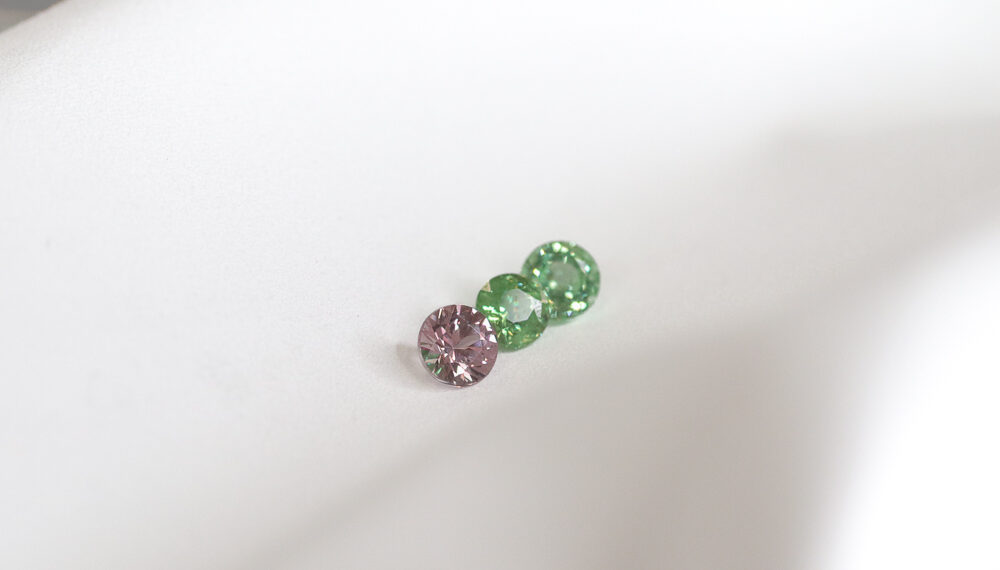
3. Malaya/Malaia Garnet: A Blush of Pink to Soft Red
This exceptional gemstone stands out within the complex garnet family. Malaya/Malaia garnets are a variety found in shades of orange, red-orange, peach, and pink, and are at times marketed as the “Imperial Garnets“.
This uniquely named gemstone pairs softly with our handmade rings. With high hardness, no cleavage, and excellent colour dispersion, it has strong durability, making it suitable for everyday jewellery wear while adding a radiant, yet soft touch.
Accented Additions
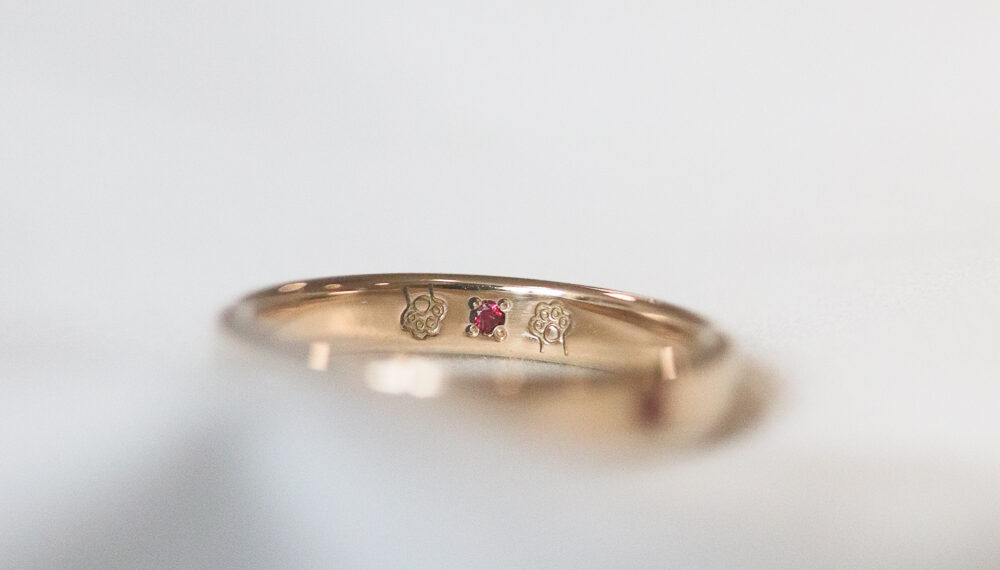
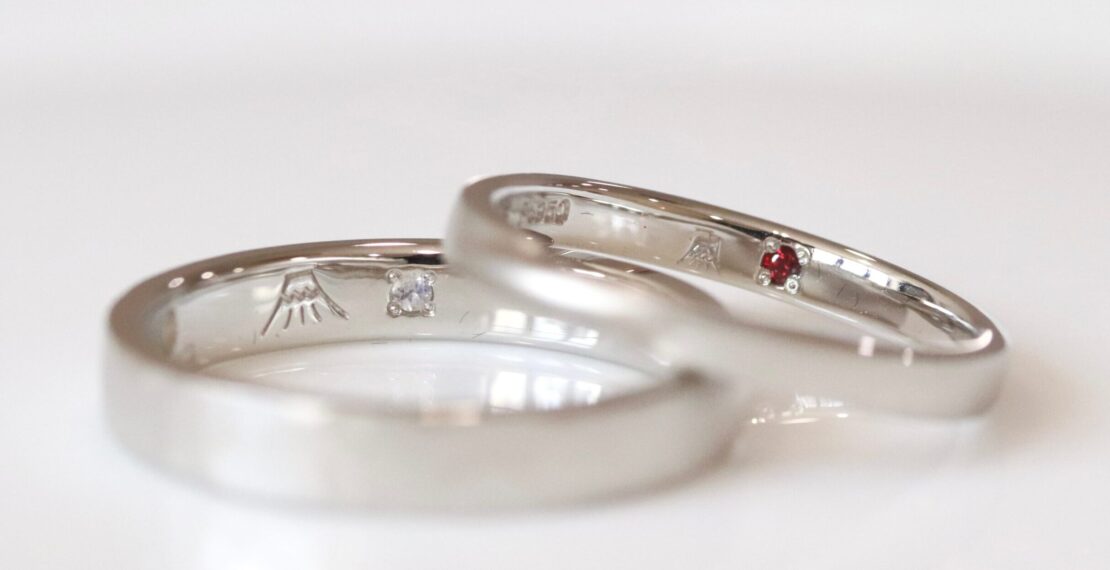
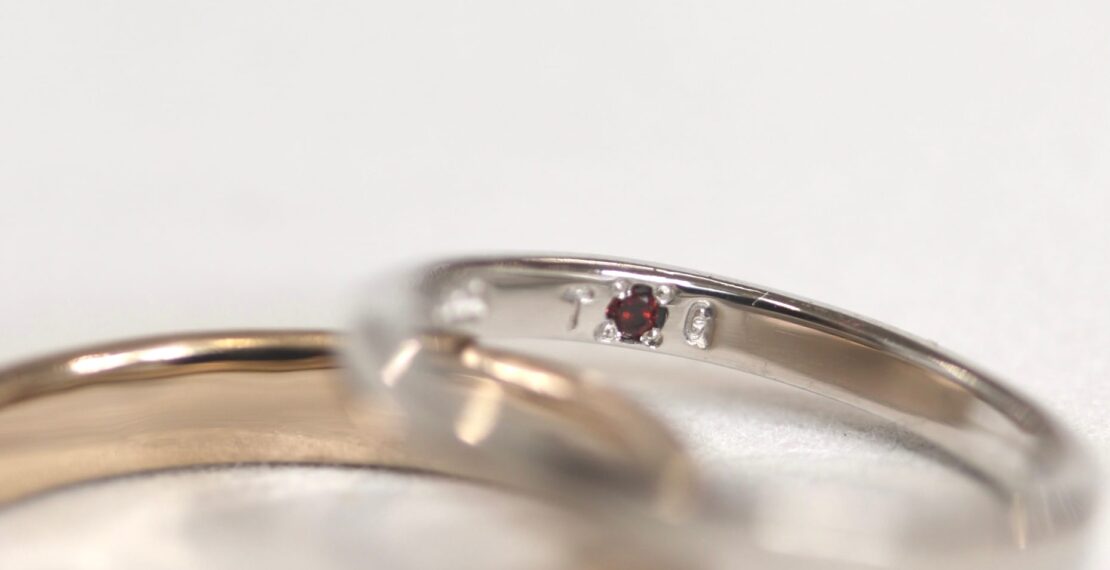
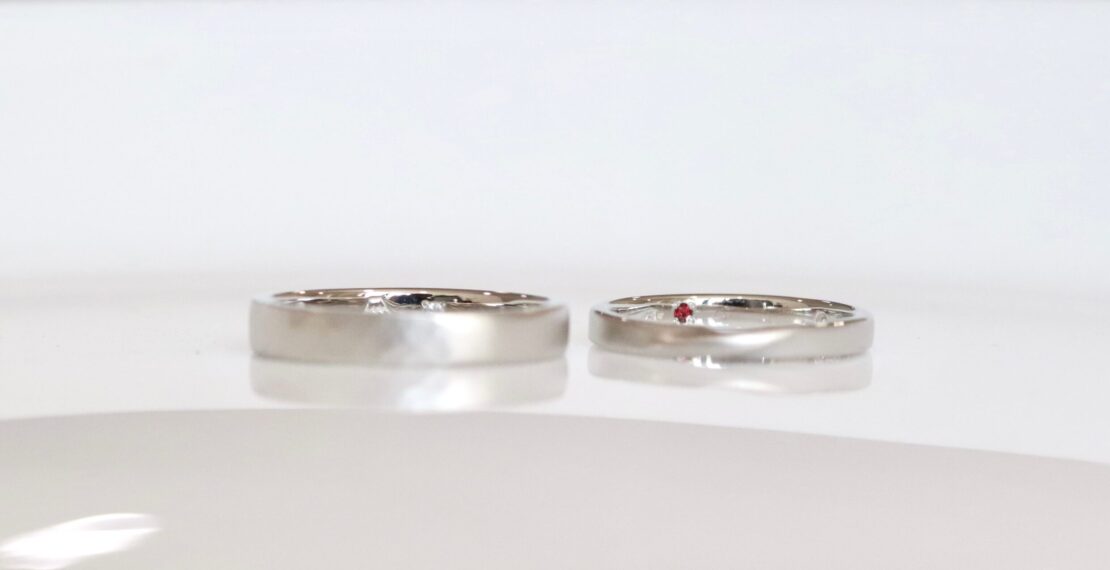
Engagement rings aside, deep, radiant garnet melee gemstones shine beautifully on their own, albeit on a significantly smaller scale. We offer both outer and inner stone setting styles, with a range of gemstones to suit your story.
Here are some examples of garnet birthstones set during KOBO’s workshops:
A precious January Gem
In conclusion, for those born in January, garnet offers not only a stunning piece of jewellery but also a meaningful connection to personal strength, passion, and vitality. Whether given as a token of love, protection, or celebration, garnet remains one of the most cherished gemstones, carrying both beauty and symbolism for generations to come. Thus, the three featured gemstones are just a glimpse of the options available. You can explore and select from a wider range of stones in the World of Gems from our sister brand, FUJIMORI KAJITA, and craft your own base rings with us today!
The information in this article has been sourced from multiple trusted gemology websites and expert references from:
1. Gemological Institute of America (GIA) | 2. International Gem Society (IGS) | 3. The Rare Gemstone Company